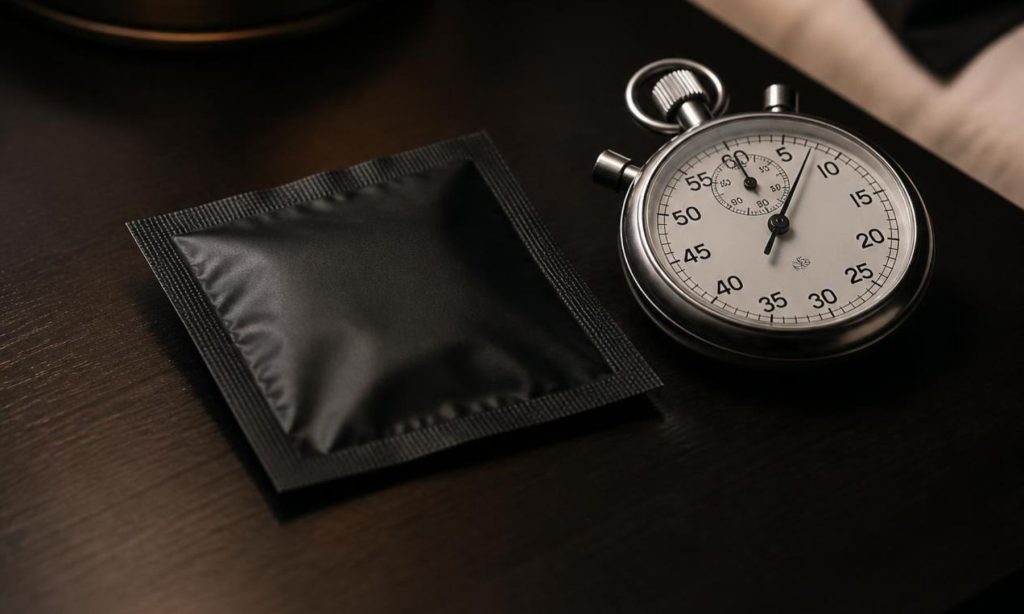
Finishing sooner than intended is one of the most common sexual concerns, and it affects men of every age. Delay condoms are one of the simplest ways to address it because they need no prescription and no change to routine. They look like standard condoms, but they contain a lubricant with a mild active ingredient designed to reduce sensitivity. This guide explains how that works, who tends to benefit, and what to consider before choosing one.
What Makes a Delay Condom Different
A delay condom starts as an ordinary natural rubber latex condom, made and tested to the same standards. The difference is the lubricant. Instead of a plain silicone or water-based lubricant, it carries a small amount of a topical anaesthetic, most commonly benzocaine and sometimes lidocaine or a similar agent. The lubricant is usually applied to the inside of the condom, where it contacts the head of the penis.
How Desensitizing Lubricants Work
Topical anaesthetics work by temporarily blocking the nerve signals that carry sensation from the surface of the skin. Applied in a low concentration, they take the edge off sensitivity rather than removing sensation altogether. With less intense stimulation, many users find it easier to last longer before reaching climax.
The effect varies from person to person and from one formulation to another, because concentration, the amount of lubricant, and individual skin sensitivity all play a part. Condom thickness also influences overall sensation, a topic covered in our guide to condom thickness explained. A delay condom is best seen as a tool that supports control, not a guarantee.
Who Delay Condoms Suit
- Men who tend to climax sooner than they or their partner would like.
- Couples who want to extend intimacy without adding medication or changing technique.
- Those who feel anxious about performance and want a discreet option that looks and feels like a regular condom.
- Anyone who wants to try a non-prescription approach before speaking to a doctor.
Who Should Be Cautious
- People with a known allergy or sensitivity to local anaesthetics, or to any ingredient listed on the pack.
- Anyone with a latex allergy. Most delay condoms are made from natural rubber latex, so our guide to latex allergy symptoms and alternatives is a useful starting point for non-latex choices.
- Couples where a partner is sensitive to the anaesthetic. A small amount may transfer during use and cause temporary numbness or irritation.
- Those who plan to use the condom for oral sex. The anaesthetic can numb the mouth and taste bitter, so delay condoms are generally not designed for this.
If finishing early is frequent, distressing, or a recent change, it is worth speaking to a doctor. Persistent premature ejaculation can have physical or psychological causes, and effective treatments and techniques are available.
Getting the Best Results
- Get the fit right. A condom that is too loose or too tight reduces both comfort and reliability, so check our condom sizing guide.
- Add extra lubricant carefully. Choose a product that is compatible with latex, and review the lubricant ingredients to avoid with latex condoms first.
- Check the expiry date and store condoms away from heat, as with any condom.
- Use one condom at a time. Layering products does not add benefit and can increase the risk of slipping.
Frequently Asked Questions
Do delay condoms really work?
Many users find they help, but results vary. The desensitizing lubricant reduces sensitivity, which can make it easier to last longer. Individual response, the amount of lubricant, and the formulation all affect the outcome.
Are delay condoms safe to use?
For most people, yes. They are made and tested like regular condoms, with a small amount of topical anaesthetic in the lubricant. Avoid them if you or your partner are allergic to local anaesthetics or latex, and stop using them if irritation develops.
Do delay condoms protect against STIs and pregnancy in the same way as regular condoms?
Yes. The barrier is a standard latex condom, so protection depends on the same things: correct fit, correct use from start to finish, and an intact, in-date product.
Can I use delay condoms for oral sex?
This is generally not recommended. The anaesthetic can numb the mouth and taste unpleasant, so choose a flavoured or plain condom designed for oral use instead.
Can brands create their own private-label delay condoms?
Yes. Manufacturers with OEM programmes can produce delay condoms under a customer’s own brand, including custom packaging and formulation, subject to the regulations in each target market.