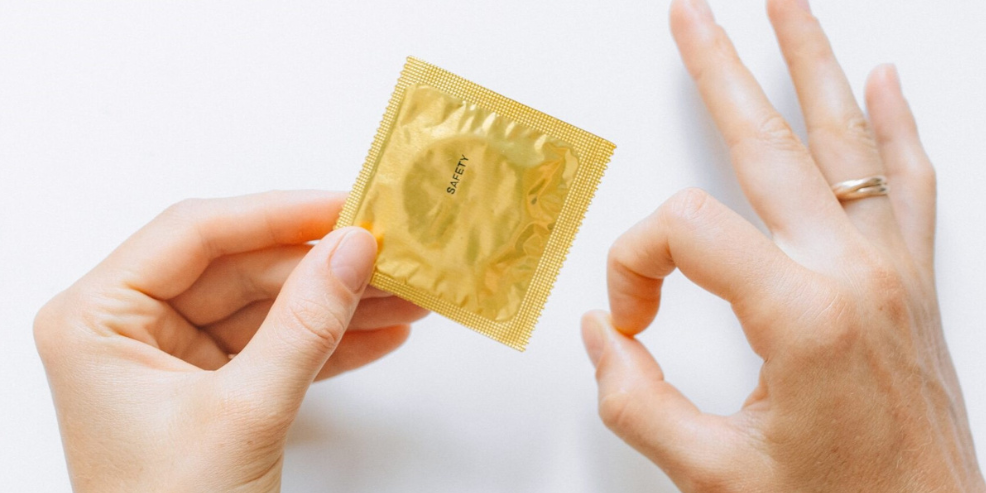
Most condom failures that get blamed on a “bad batch” are actually a lubricant problem. Natural rubber latex is a remarkably strong material when it’s manufactured and tested correctly, but it has one well-documented weakness: certain lubricant ingredients degrade it on contact, sometimes in a matter of minutes. Knowing which ingredients to avoid, and why, is one of the simplest ways to make sure a condom performs the way it was tested to.
Why Some Lubricants Break Down Latex
Natural rubber latex is held together by a network of cross-linked polymer chains, built during the vulcanisation stage of manufacturing. Oils and oil-derived compounds dissolve and swell this polymer network, softening the film and reducing its tensile strength and elasticity. The effect isn’t gradual guesswork — laboratory studies on latex compatibility consistently show measurable strength loss within minutes of oil contact, well before any visible sign of damage appears. That’s why an oil-based lubricant can cause a condom to fail even though it looked and felt fine going in.
The Main Offenders: Oil-Based Lubricants
These are the ingredients most likely to show up on a label and compromise a latex condom:
- Mineral oil and petroleum jelly (including brands like Vaseline)
- Baby oil and massage oils
- Cooking oils — coconut, olive, and vegetable oil included, despite being marketed as “natural”
- Cocoa butter and shea butter
- Most body lotions, hand creams, and moisturisers, even unscented ones
- Petroleum-based massage candles
Ingredients That Look Safer Than They Are
A few categories cause confusion because they sit in a grey area rather than a clear yes or no:
- “Warming” or “flavoured” lubricants — many use glycerin or sugar alcohols as their base, which is fine, but some budget formulations still blend in oils for texture. Check the full ingredient list, not just the front label.
- Silicone lubricants on silicone toys — safe for latex condoms, but silicone-on-silicone contact can degrade certain sex toy materials, which is a separate compatibility issue worth knowing about.
- Numbing or desensitising gels — often oil-based even when marketed for use “with protection,” so the base formulation still needs checking.
What Is Actually Safe With Latex
Two categories are reliably compatible with natural rubber latex:
- Water-based lubricants — the most widely available and versatile option, though they dry out faster and may need reapplication.
- Silicone-based lubricants — longer-lasting and unaffected by water, and chemically inert against latex.
A Quick Label-Reading Habit
Before using any lubricant with a latex condom, scan the ingredient list for the words “oil,” “petrolatum,” “paraffin,” or “mineral.” If any of those appear near the top of the list, treat it as oil-based regardless of how it’s marketed. This same compatibility logic applies to dental dams, which are made from the same material and degrade the same way.
Why This Matters for Manufacturers Too
Lubricant compatibility isn’t only a consumer-facing issue — it factors into product design from the start. The silicone-based lubrication applied during manufacturing is chosen specifically because it’s stable against the latex film over the product’s shelf life, and it’s one of many formulation decisions that also interact with how thin a condom’s latex wall can safely be made without compromising strength. Brands working on private-label or custom formulations can raise lubricant compatibility directly with their manufacturing partner during OEM development rather than discovering an issue after launch.
The Bottom Line
Oil breaks down latex — reliably, quickly, and regardless of how natural or gentle the oil is marketed to be. Sticking to water-based or silicone-based lubricants removes the risk entirely, and it’s one of the few safety habits that costs nothing to adopt.