The conversation around sustainable living has expanded to cover every consumer choice — from the food we eat to the clothes we wear. Sexual health products, however, are rarely part of this conversation. They should be. The global condom market produces billions of units annually. The material those units are made from has a measurable impact on carbon emissions, biodiversity, and plastic pollution in our waterways. As a manufacturer rooted in the heart of Malaysia’s natural rubber industry, Nulatex is uniquely positioned to lead this conversation.
Here is why choosing natural rubber latex (NRL) is one of the simplest and most meaningful eco-conscious switches a consumer can make.
The Problem with Synthetic Alternatives
Polyurethane (PU) condoms became popular in the 1990s as a non-latex option for people with latex allergies. While they solved an allergy problem, they introduced a significant environmental one:
- Fossil Fuel Origin: Polyurethane is a petroleum-derived plastic. Every PU condom begins its life as crude oil extracted from the earth.
- Non-Biodegradable: PU does not break down in landfill conditions in any meaningful timeframe. It persists in the environment for hundreds of years, fragmenting into microplastics.
- Energy-Intensive Production: The chemical synthesis of polyurethane requires significantly more energy than tapping and processing natural latex.
The Natural Rubber Latex Lifecycle: A Circular Story
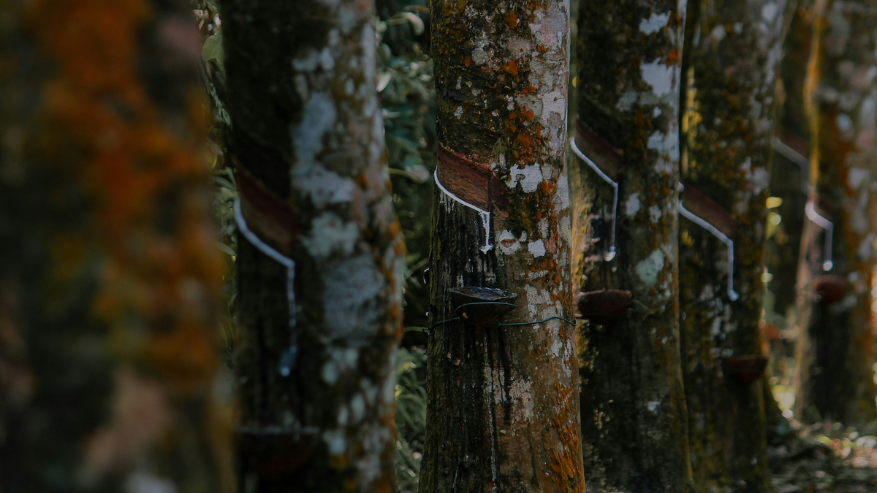
Natural rubber latex tells a very different environmental story, from harvest to end of life. The Hevea brasiliensis tree, the source of natural rubber, actively sequesters carbon dioxide from the atmosphere during its growing years. In Malaysia — one of the world’s leading latex producers — modern plantations are increasingly managed under FSC (Forest Stewardship Council) certification. Read more about Malaysia’s role as the world’s condom manufacturing hub and the sustainable supply chains that support it.
Latex is harvested by “tapping” — making a small incision in the bark to collect the milky sap. The tree is not cut down. A single Hevea brasiliensis tree can be productively tapped for 25 to 30 years before replanting, and each replanted tree begins absorbing carbon from day one.
Biodegradability: The End-of-Life Advantage
A natural latex condom disposed of correctly will biodegrade in a composting or natural soil environment within 6 months to a few years — a dramatically shorter timeframe than the centuries required by synthetic materials.
This biodegradation produces no toxic residues. The natural rubber returns to its organic components: carbon, hydrogen, and oxygen. Compare this to a polyurethane or synthetic condom, which fragments into microplastics that contaminate soil, enter groundwater, and ultimately accumulate in the marine food chain.
Eco-Friendly Manufacturing: The Factory Matters Too
The environmental impact of a condom is not limited to its raw material. The manufacturing process also plays a role. Nulatex’s manufacturing operations are committed to reducing the environmental footprint of every unit produced:
- Renewable Energy Integration: Our manufacturing facilities are progressively integrating renewable energy sources to reduce grid dependence and carbon emissions.
- Responsible Wastewater Management: Latex processing produces wastewater that, if unmanaged, can be harmful. Nulatex follows strict effluent treatment protocols to prevent environmental contamination.
- Minimal Packaging Initiative: We are actively reviewing our packaging materials to reduce plastic use across our product lines, moving toward recyclable foil and cardboard configurations.
The Vegan Factor: Closing the Sustainability Loop
Traditional latex manufacturing often uses casein — a milk-derived protein — in the softening process. For consumers who prioritise both environmental and ethical standards, this is a conflict. Nulatex is committed to vegan-certified processing, eliminating animal-derived additives from our production process entirely.
This closes the loop on a genuinely sustainable product: sourced from a renewable tree, manufactured with environmental care, free from animal derivatives, and fully biodegradable at end of life. Our full range of eco-conscious products is available through our online store, or explore custom OEM options for businesses looking to launch their own sustainable sexual health brand.
Green Choice Tip: When disposing of a natural latex condom, wrap it in a tissue and place it in a general waste bin — not the toilet, where it can enter waterways. In a home composting environment, it will biodegrade naturally over time.
The Nulatex Commitment: We believe that responsible protection should extend beyond the bedroom. Choosing natural rubber latex is a choice for your health, your partner’s health, and the health of the planet.