Sexual health education has a significant blind spot. Condoms are discussed and demonstrated, but dental dams? Most people remain unaware that this product even exists. This is not a minor oversight — it is a gap in public health knowledge that leaves an entire category of sexual activity unprotected.
Here is the comprehensive guide you should have received years ago.
What Exactly Is a Dental Dam?
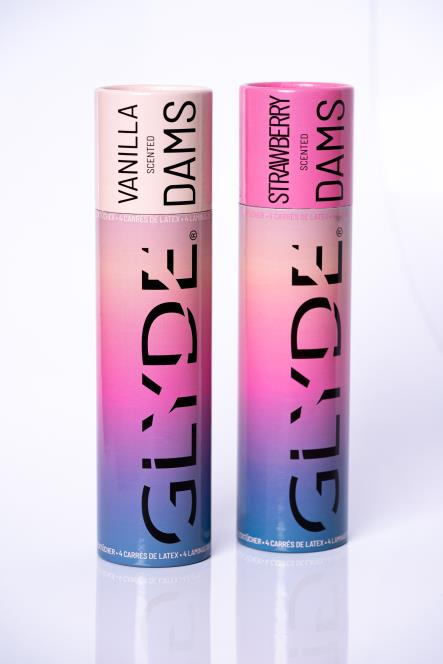
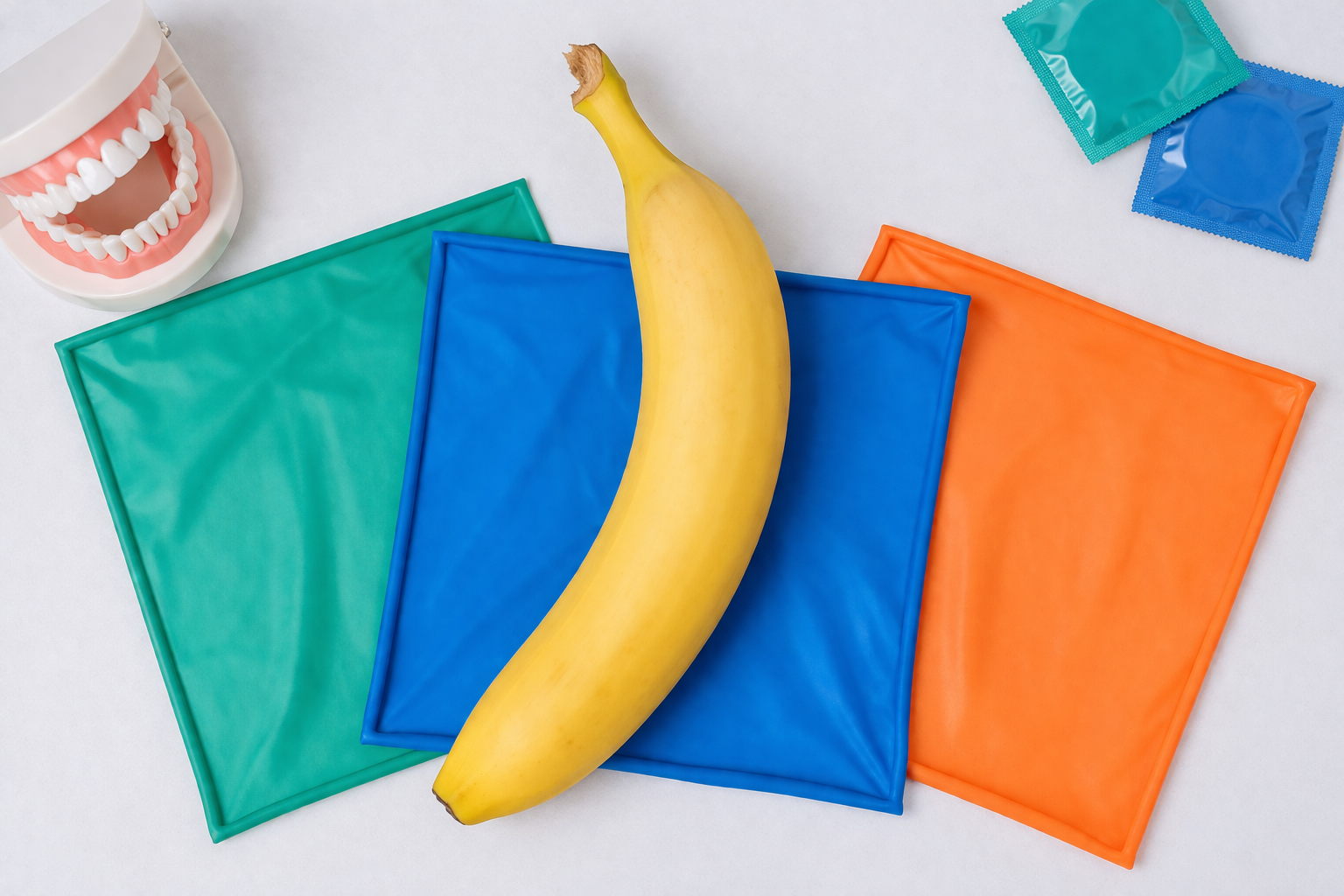
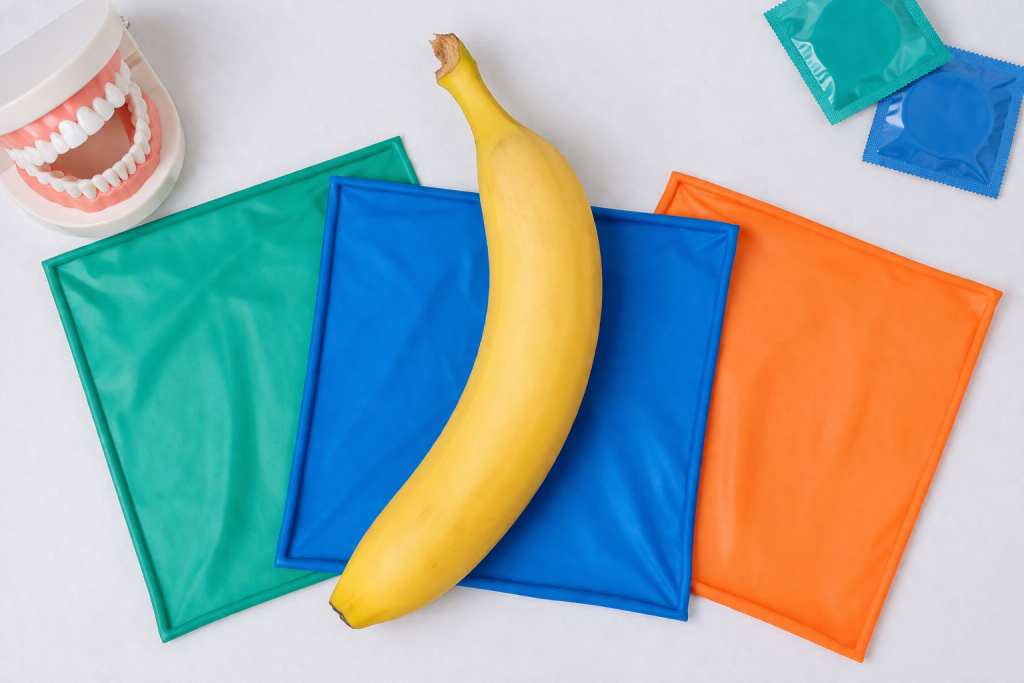
A dental dam is a thin, flat sheet of latex (or polyurethane for latex-sensitive individuals) that acts as a barrier during oral-vaginal (cunnilingus) or oral-anal (anilingus) contact. The name comes from their original use in dentistry, where they were used to isolate a tooth during procedures. Their application in sexual health was recognised later.
A dental dam does not penetrate anything. It lies flat over the vulva or anus, allowing the giver to perform oral stimulation while the barrier prevents direct mucous-membrane-to-mucous-membrane contact.
Why Does Oral Sex Carry STI Risk?
A common misconception is that oral sex is “risk-free.” This is medically incorrect. Learn more about latex dental dam myths here. The following infections can be transmitted through unprotected oral-genital or oral-anal contact:
- Herpes (HSV-1 and HSV-2): Highly transmissible through skin-to-skin contact, including oral contact with genital tissue, even when no sores are visible.
- Human Papillomavirus (HPV): The most common STI globally. Can be transmitted orally and is linked to oropharyngeal cancers.
- Gonorrhoea and Chlamydia: Both can infect the throat and can be transmitted or received through oral sex.
- Syphilis: Can be transmitted through oral contact with an active sore (chancre).
- Hepatitis A and B: Hepatitis A in particular carries risk through oral-anal contact.
A dental dam, when used correctly, significantly reduces the risk of all of the above.
How to Use a Dental Dam: Step by Step
- Check the packaging: Inspect the seal. Do not use a dam from a damaged or expired package.
- Open carefully: Do not use teeth or scissors to open the packaging.
- Identify which side: If the dam is lubricated, the lubricated side faces the receiver (the person being stimulated). The dry side faces the giver.
- Hold it in place: Hold the dam flat against the vulva or anus throughout stimulation. It will not “stay on by itself” — it requires one hand to maintain contact and prevent slipping.
- One use only: Never flip a dental dam over and use both sides. Discard after one use.
How to Make a Dental Dam from a Condom
Dental dams are not yet available in every pharmacy or convenience store. In a situation where you have a condom but no dental dam, you can make an effective barrier using any standard condom from our full product range:
- Unroll the condom completely.
- Cut off the tip and the base ring.
- Cut down one side lengthwise.
- Unfold it into a flat sheet: You now have a serviceable barrier. Note: this works best with non-lubricated condoms.
Enhancing the Experience: Lubrication
Dental dams might reduce sensation for the receiver compared to direct contact. Adding a small amount of water-based lubricant between the dam and the receiver’s skin significantly improves sensation and makes the barrier easier to hold in place. Do not use oil-based lubricants with latex dams, as oils degrade latex.
Pro Tip: Add a drop of water-based lubricant to the receiver’s side of the dental dam before use. This small step dramatically increases sensation and keeps the dam from bunching or shifting.
Who Should Use a Dental Dam?
The short answer: anyone engaging in oral-vaginal or oral-anal sex who has not had a recent, comprehensive STI test with their partner — or who is in a relationship where monogamy has not been fully established. This is not about judgment; it is about informed choice.
Dental dams are also a valuable tool for individuals who are immunocompromised, pregnant, or who simply value a consistent approach to sexual health.
Not sure where to buy? See our guide on where to find Nulatex products online and in-store for discreet and reliable purchasing options.