If you have ever received a thorough sexual health education, you were probably taught about condoms. You may have been shown how to put one on a banana. What you were almost certainly not taught about is the dental dam — the barrier method for oral sex that most people have never heard of, let alone used. This is a significant gap.
Oral sex carries real STI transmission risk. A dental dam used correctly eliminates that risk in the same way a condom does for penetrative sex. This guide covers everything a first-time user needs to know, without jargon and without judgment.
What Is a Dental Dam?
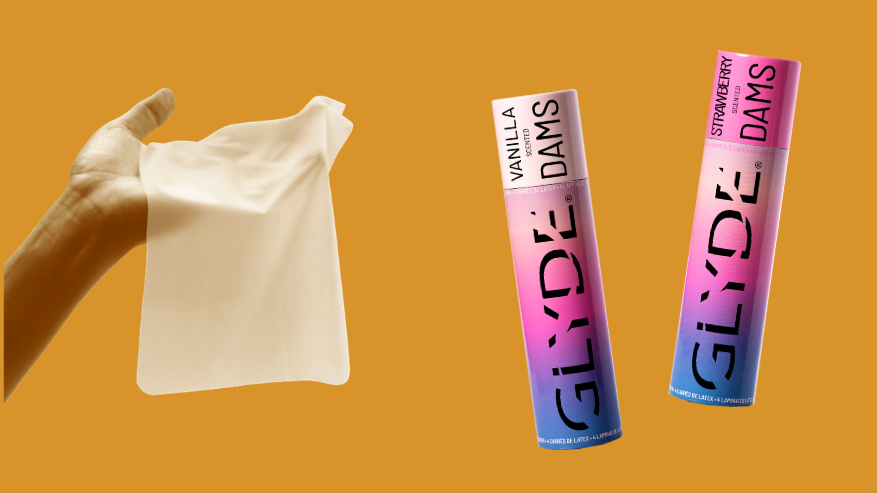
A dental dam is a thin, flat sheet of latex (or polyurethane for latex-sensitive individuals) that acts as a physical barrier during oral-vaginal (cunnilingus) or oral-anal (anilingus) sex. The name dates from dentistry, where similar latex sheets were used to isolate a tooth during procedures. Their application in sexual health developed later, and the product has since been purpose-engineered for this use.
A dental dam does not penetrate. It lies flat over the vulva or anus, allowing the giver to perform oral stimulation while preventing direct mucous-membrane-to-mucous-membrane contact — the primary route of STI transmission during oral sex. For a detailed comparison with condoms and when to use each, see our guide: Dental Dams vs. Condoms.
Why Oral Sex Carries STI Risk
One of the most persistent myths in sexual health is that oral sex is “safe.” It is lower risk than unprotected penetrative sex for some infections — but it is not risk-free. The following STIs can be transmitted through unprotected oral-genital or oral-anal contact:
- Herpes (HSV-1 and HSV-2): transmissible through skin-to-skin contact, including oral contact with genital tissue, even when no sores are visible.
- HPV (Human Papillomavirus): the most common STI globally; can be transmitted orally and is linked to oropharyngeal (throat) cancers.
- Gonorrhoea and Chlamydia: both can infect the throat and be transmitted or received through oral sex.
- Syphilis: can be transmitted through oral contact with an active sore.
- Hepatitis A and B: Hepatitis A in particular carries risk through oral-anal contact.
A dental dam, when used correctly, significantly reduces transmission risk for all of the above. For a thorough debunking of common misconceptions, read: Debunking Dental Dam Myths.
Who Should Use a Dental Dam?
The short answer: anyone engaging in oral-vaginal or oral-anal sex who has not had a recent, comprehensive STI test with their partner — or who is in a relationship where mutual monogamy has not been fully established through open conversation and testing.
Dental dams are also particularly valuable for:
- Individuals who are immunocompromised, for whom even lower-risk infections can have serious consequences.
- Anyone during the window period following a potential STI exposure, before testing results are confirmed.
- People who value a consistent approach to safer sex, regardless of relationship status.
How to Use a Dental Dam: Step by Step
- Check the packaging: the seal should be intact. Do not use a dam from a torn or expired package.
- Open carefully: do not use teeth, scissors, or fingernails.
- Identify the correct side: if the dam is lubricated, the lubricated side faces the receiver. The dry side faces the giver.
- Add lubrication: place a small amount of water-based lubricant between the dam and the receiver’s skin. This significantly improves sensation and prevents the dam from shifting.
- Hold in place throughout: the dam will not stay on by itself — it requires one hand to maintain contact and position.
- Single use only: never flip a dental dam and use both sides. Never reuse. Dispose of it after the encounter.
How to Make a Dental Dam from a Condom
Dental dams are not available in every pharmacy or convenience store. In a situation where you have a condom but no dental dam, any standard condom from the Nulatex product range can be converted into an effective barrier in four steps:
- Unroll the condom completely.
- Cut off the tip.
- Cut off the base ring.
- Cut down one side lengthwise and unfold into a flat sheet.
This works best with non-lubricated condoms. The result is a serviceable barrier that covers a similar surface area to a purpose-made dental dam. For the full technique and troubleshooting, see our article: Dental Dams 101: Everything You Were Never Taught in Sex Education.
Addressing the Sensation Question
The most common objection to dental dams is reduced sensation. This is a legitimate concern, and it is addressed directly by technique rather than avoided. Adding water-based lubricant to the receiver’s side of the dam substantially improves tactile transmission. As with condoms, the right product and the right technique close the gap between protected and unprotected sensation considerably.
Read our dedicated guide: Will a Dental Dam Ruin the Sensation? — with specific techniques for enhancing pleasure while using oral sex barriers.
Where to Buy Dental Dams
Nulatex latex dental dams are available online. For discreet purchase options, see our guide: Where to Buy Condoms — The Best Place for Discreet and Reliable Purchases. The same principles apply to dental dams — online purchase from a reputable manufacturer offers the best combination of privacy, product quality, and availability.
Pro Tip: Keep dental dams stored in the same place as your condoms — at room temperature, away from direct sunlight and sharp objects. Check the expiry date before every use, exactly as you would with a condom. An expired latex dam has degraded material and should be discarded.