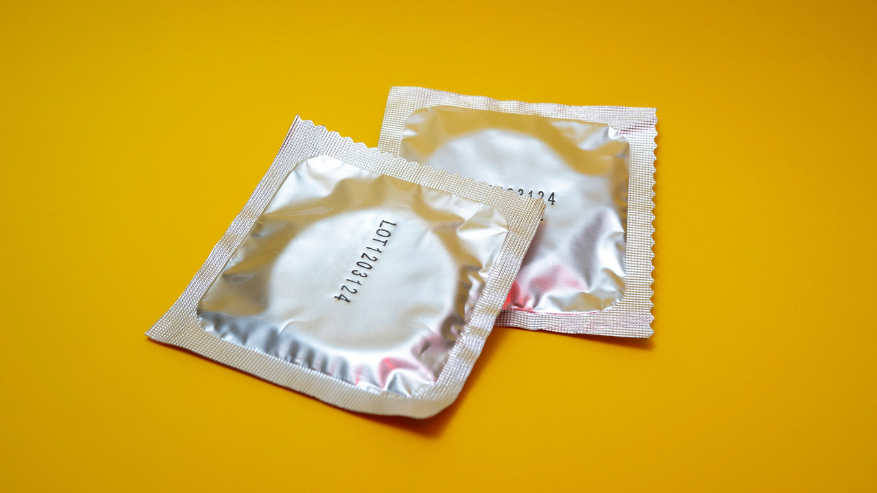
When you pick up a condom, you are placing considerable trust in a product measured in fractions of a millimetre. The wall of a premium ultra-thin natural latex condom can be less than 0.05mm thick — roughly the same as a single strand of human hair. At that scale, even a defect invisible to the naked eye can compromise the barrier completely. The question is: how does a manufacturer guarantee that every single unit out of millions is free from such defects?
The answer is electronic pin-hole testing, and it is the most important quality control step in latex condom manufacturing. As one of Malaysia’s leading OEM condom manufacturers, Nulatex applies this process to 100% of production — not sampling, not batch averages, but every unit.
What Is a Pin-Hole, and Why Is It Dangerous?
A pin-hole is a microscopic perforation in the latex wall. A pin-hole too small to see or feel is still large enough to allow the passage of spermatozoa (approximately 3–5 micrometres in diameter) and viral particles (HIV, for example, measures approximately 120 nanometres — meaning viral particles are roughly 25 times smaller than a sperm cell). A condom with a single pin-hole offers significantly reduced protection, even though it appears intact to both the manufacturer and the consumer.
How Electronic Pin-Hole Testing Works
The electronic pin-hole test — also called the electrical conductivity test — works on a simple but elegant principle: latex is an electrical insulator, but water is a conductor. The test involves:
- Filling the condom with a conductive fluid (or placing it over a conductive mandrel).
- Surrounding the outside of the condom with electrode elements.
- Applying a standardised low voltage across the system.
- Measuring for any electrical current passing through the latex wall.
If the latex is intact, no current flows — the insulating rubber wall blocks it. If a pin-hole is present, the conductive fluid inside makes electrical contact with the external electrode through the defect, completing a circuit. That condom is immediately flagged and rejected.
The sensitivity of modern electronic testing equipment can detect holes as small as 0.005mm — five times smaller than anything a water-leakage or air-inflation test can reliably identify. This matters because international standards such as ISO 4074 (the governing standard for male latex condoms) set maximum acceptable pin-hole defect rates, and Nulatex’s processes are designed to operate significantly below those thresholds.
What ISO 4074 Actually Requires
ISO 4074 is the international standard that governs natural rubber latex male condoms. Among its requirements, it specifies an Acceptable Quality Level (AQL) for pin-hole defects found during the electrical test — meaning the maximum permissible number of defective units per batch for a product to be accepted.
For context: an AQL of 0.25 means that in a batch of 1,000 condoms, no more than 2–3 electrically detected defects are permitted before the batch is rejected entirely. Nulatex’s OEM manufacturing process is calibrated to produce consistently within this standard, with internal targets set more tightly than the ISO minimum.
Pin-Hole Testing vs. Other Quality Checks
Electronic pin-hole testing is one layer in a multi-stage quality assurance process. It works alongside:
- Water-leak testing: each condom is filled with 300ml of water and examined for leakage — an effective gross-defect check.
- Air-burst (airburst) testing: condoms are inflated with air until they burst. The burst volume and pressure must meet ISO 4074 minimums, testing overall material strength and elasticity.
- Dimensional testing: length, nominal width, and wall thickness are measured against specification to ensure consistent fit and sensation.
- Package integrity testing: individual foil wrappers are tested for seal integrity to ensure the air cushion that protects the condom during storage and transit remains intact. Always check this cushion before use — as described in our condom storage guide.
No single test catches every possible defect. The combination of all four, applied to 100% of production, is what allows a manufacturer to make a credible claim of consistent quality across millions of units.
What This Means for the Consumer
The pin-hole test is not visible on the packaging. There is no label or certification mark specific to it. But the ISO 4074 certification that appears on a Nulatex condom package is your assurance that every unit in that box has passed the full battery of tests described above — including 100% electronic pin-hole screening.
When choosing a condom, brand recognition and packaging design are easy proxies — but they tell you nothing about manufacturing quality. The questions that actually matter are: Is the product ISO 4074 certified? Does the manufacturer test 100% of production or only samples? And does the facility hold ISO 13485 medical device quality management certification? Nulatex answers yes to all three.
Learn more about why natural latex remains the gold standard for protection, and how the material properties of natural rubber contribute to both safety and sensation.