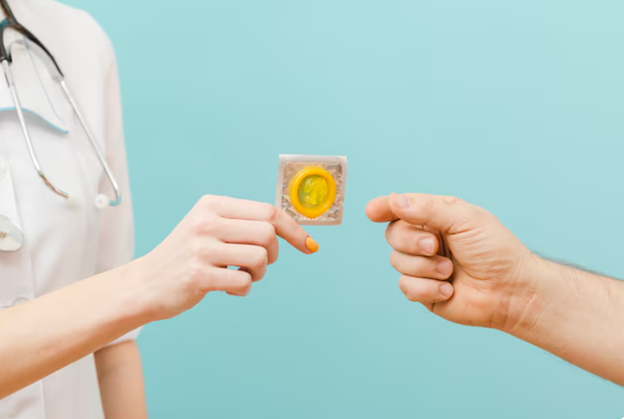
Manual play is a foundational part of intimacy, yet it is rarely given the same “safety” attention as penetrative sex. Using your hands involves more risk than most people realize—not just from infections, but from physical irritation.
Here is why finger condoms (also known as finger cots) are becoming a must-have in the modern bedside drawer.
Preventing the “Sub-Ungual” Bacterial Transfer The space under the fingernail (the sub-ungual region) is a breeding ground for bacteria, including E. coli and various fungi. Even with thorough hand washing, these pathogens can remain trapped. When fingers are used for internal stimulation, these bacteria can be introduced into the vagina or urethra, leading to:
Bacterial Vaginosis (BV): A common disruption of the vaginal flora.
Urinary Tract Infections (UTIs): Often caused by the movement of bacteria during play.
A finger condom provides a smooth barrier that keeps outside bacteria away from sensitive internal tissues.
Eliminating Micro-Trauma from Nails The vaginal and anal linings are incredibly delicate. Even a microscopic “hangnail” or a slightly jagged edge on a manicured nail can cause micro-tears. These tears might not bleed or hurt immediately, but they act as “open doors” for STIs and cause localized inflammation. A latex finger condom provides a perfectly smooth surface, ensuring that the only thing felt is the intended pressure and sensation.
Skin-to-Skin STI Protection It is a common misconception that STIs only spread through fluid exchange. Infections like HPV (Human Papillomavirus) and Herpes (HSV) can be transmitted through skin-to-skin contact. If a partner has a small, unnoticed lesion on their finger or a wart, it can easily be transmitted to a partner’s genitals. Finger condoms significantly reduce this risk, providing peace of mind during foreplay.
Pro Tip: Apply a drop of water-based lubricant inside the finger condom before putting it on to increase sensitivity for the wearer, and a generous amount outside for the receiver.